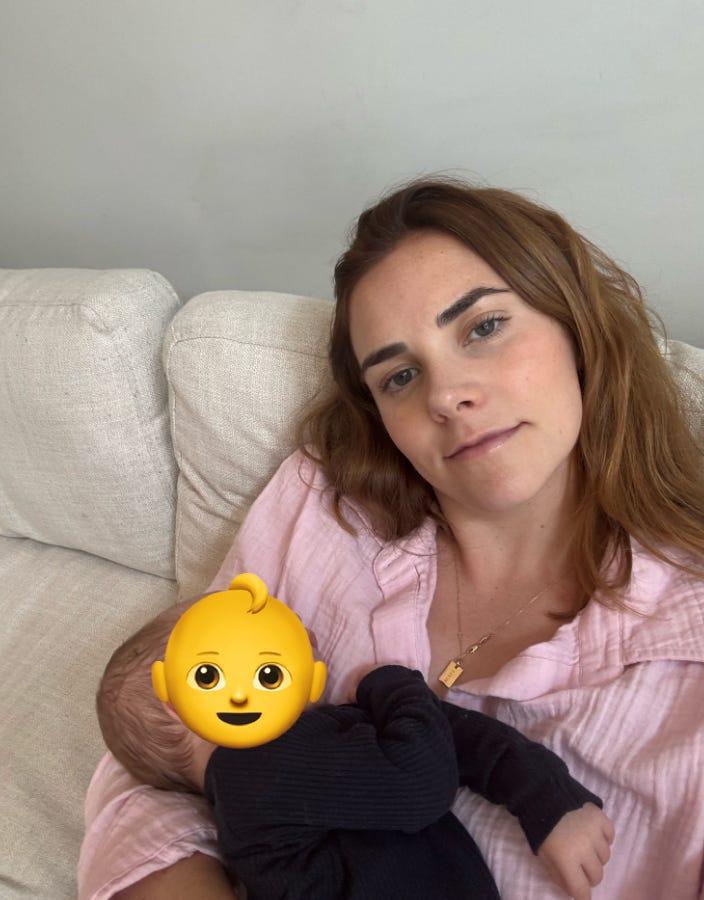
Breast or Bottle?
I Give You Permission to Choose What’s Best for You

One of the most personal and often loaded decisions a new mom faces is whether to breastfeed or formula feed. Ask any mom and she’s probably tried some combination: breastfeed only, breastfeed and pump, breastfeed and formula, pump only, formula only. The options are endless, and so is the unsolicited advice.
You’ve probably heard both sayings: Breast is Best and Fed is Best. Here’s my take, six weeks postpartum with my second son.
My Breastfeeding Story
Breastfeeding with my first son was one of the most painful experiences of my life — emotionally, mentally, and physically. He had a lot of trouble latching and lost his birth weight, sending us into the classic newborn anxiety spiral. We tried everything: daily visits to a lactation consultant, nipple shields, hand-expressing into a syringe as an “appetizer” before each feed. After weeks of clogged ducts, a brutal 24-hour bout of mastitis, and more tears than I can count, we switched to pumping.
Pumping was its own special misery. Picture me in a pumping hoodie, hood up, chocolate in hand, sulking on the couch at 3am while my husband and son slept. I cried through nearly every session. (Also, no one warned me that pumping would make my nipples elongate. So that’s fun.) We switched to exclusive formula at six weeks, and I never looked back.
So when my second came along, I told myself if breastfeeding doesn’t work right away, we’re going straight to formula. No pumping, no prolonged suffering.
At around four weeks when I was writing this (now publishing two weeks later because ooooffff life got crazy)…breastfeeding was okay? Sometimes he latches beautifully. Sometimes he goes full velociraptor and mauls me, gets frustrated, and falls off. My supply is so forceful he chokes on it — like I’m aiming a watergun at his face. Nights are the worst, when I’m engorged and neither of us is happy. Feeding in public gives me anxiety. I’m leaking everywhere. Literally - soaking through a burp cloth that I put in my bra and showing up to daycare drop off with breast milk leaking through my top. I have zero time to myself. I tried to run an errand to CVS the other day (5 minute drive) and my husband called me asking to hurry back because our little man was hungry.
And yet... I haven’t stopped. I keep moving the goalpost: just make it to the one-month appointment. Maybe breastfeed during the day and formula at night. Maybe it’s more convenient for upcoming summer travel - less stuff to worry about.
There’s something very hormonal about stopping breastfeeding (more on weaning in a separate post up next). I feel guilty for quitting when my body is still producing milk. I feel the invisible judgment of the silent critics. I feel like I’m doing something wrong when breastfeeding seems to come so effortlessly to other moms.
Best Friend Voice Notes
Recently, two of my closest friends sent me voice notes that I desperately needed to hear.
My best friend (no kids) told me there’s no breastfeeding experience that is “magical.” Yes, it’s incredible what our bodies can do. Yes, there are real benefits. But those glowing, effortless breastfeeding videos on Instagram? She called it - they’re lying. For the handful of moms it’s truly easy and magical, that’s so amazing. But the rest of us may be suffering in silence and pretending otherwise, like me.
My best mama friend — whose daughter is the same age as my first — told me what no one told her during her own postpartum experience: “I Give You Permission.”
Permission to not breastfeed. Permission to do whatever the f*** works for you. You don’t have to wait it out hoping it gets better. You don’t have to book another expensive lactation appointment. No one had given her that permission, and she wanted to make sure I had it.
So now I’m passing it on.
I Give You Permission
To every mom reading this: I give you permission to do what is best for you and your baby. You don’t have to push through engorgement or mastitis. You don’t have to leak in public. You don’t have to give yourself a timeline. You don’t have to compare yourself to friends, influencers, or anyone else. Maybe they’re struggling too and just not showing it.
Do what makes you happy. A happy mama makes a happy baby.
The Real Benefits of Breastfeeding
Per the CDC:
Nutrition — Breast milk actually adapts to your baby’s changing nutritional needs as they grow. Women’s bodies are genuinely incredible.
Protection — Breastfed babies have a lower risk of asthma, obesity, type 1 diabetes, SIDS, ear infections, and stomach bugs.
Immunity — Breast milk is packed with antibodies that help build baby’s immune system. The first six to eight weeks contain the strongest concentration.
Convenience — No prep, no bottles, always available. Just feed wherever you are.
Mother’s Health — Breastfeeding is linked to lower risk of breast and ovarian cancer, type 2 diabetes, and high blood pressure. (Note: Research also suggests breastfeeding may reduce postpartum depression and anxiety — but in my personal experience, it was actually a significant source of anxiety.)
Practical perks — Minimal cleanup, no wasted milk, and it’s free.
The Real Benefits of Formula
The CDC doesn’t actively promote formula, but here’s what I know from lived experience and research:
Modern formula is genuinely good. We live in the 21st century. If we can build robots, we can make clean, safe, high-quality infant formula as close to breast milk as possible (Shoutout to Bobbie.)
You get your body back — no painful, leaking breasts; freedom to have a glass of wine or a strong coffee; the ability to sleep while your partner does a feed.
Your partner can share the feeding load — which matters enormously for your relationship, your rest, and your mental health.
Personal freedom — you can step out for an hour without rushing home. You can have a full conversation while feeding. You can just... breathe.
The Challenges of Each Feeding Approach
Breastfeeding challenges:
Difficult to feed discreetly in public without a lot of setup
Engorgement, leaking, sore and cracked nipples
Limited personal freedom
No way to track exactly how many ounces baby is getting
Anxiety when latch doesn’t work
Hard to give your older child attention during feeds (this one genuinely breaks my heart when my toddler comes over with tears in his eyes wanting me to read to him)
Formula challenges:
Potential for acid reflux or digestive issues, sometimes requiring a formula switch
Expensive
Lots of bottles to clean and sanitize
Formula is often wasted when baby doesn’t finish a bottle
Extra gear required (bottle warmer, sanitizer, the right nipple sizes)
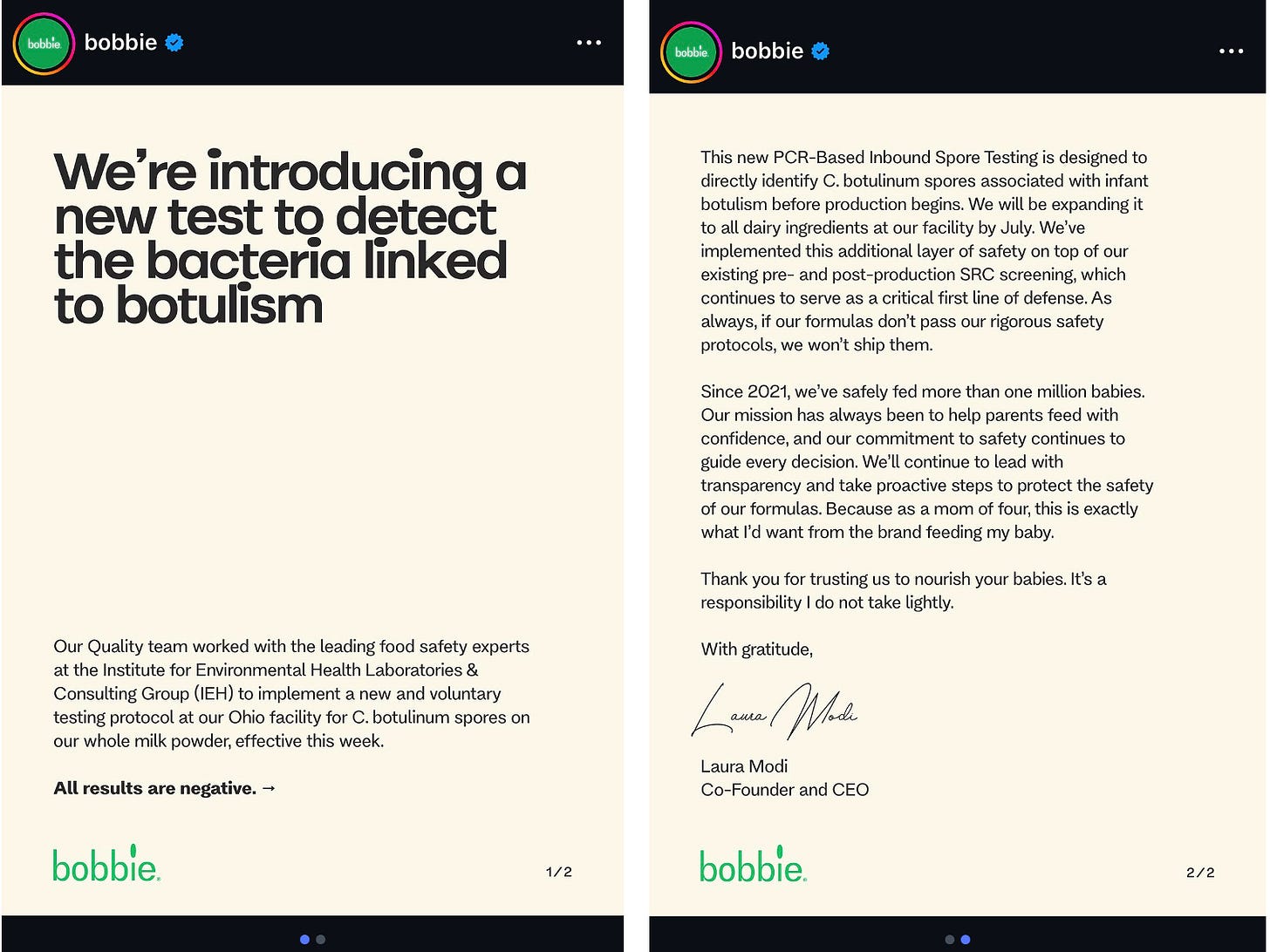
Recently, there have been concerns about infant botulism from contaminated formula — worth staying informed, though reputable brands like Bobbie have been proactive about addressing this
What Frustrates Me
Lactation consultants and hospital nurses rarely mention formula as an option. In my experience, the word was barely spoken — they referenced a breast milk bank before they’d suggest formula. This puts enormous pressure on new moms from the very first hours postpartum, making it feel like breastfeeding is the only acceptable path.
The American Academy of Pediatrics recommends exclusive breastfeeding for the first six months, and continued breastfeeding through twelve months or beyond. I understand the intent, but for moms who can’t or don’t want to breastfeed, those who need to return to work, travel, care for older children, or simply aren’t able to, this guidance can feel less like a recommendation and more like a verdict.
Social media sells an unrealistic version of breastfeeding. Happy, glowing, effortless. Remember my theory? A lot of us are quietly struggling.
The biggest myth of all: that you won’t bond with your baby if you formula feed. This is simply not true. I’d argue I bonded more deeply with my first after I stopped breastfeeding and pumping, because I was finally a happier, more present version of myself. The feeds became enjoyable. That bond is real and it is strong. Recently, I gave my second a bottle of formula and he looked up at me, eyes wide open, and my heart felt full in a way that’s hard to describe — different from breastfeeding, but no less meaningful.
The Bottom Line
I used to look back on my first postpartum experience with guilt. I didn’t stick it out. Other moms seemed to manage six months of exclusive breastfeeding with ease. But I’ve learned not to compare my experience to someone else’s — and to remember I’m only seeing what they choose to share.
Here’s the truth: feeding a baby is hard work, no matter how you do it. Breast, pump, or bottle. There is no easy road.
If breastfeeding works beautifully for you, if your baby latches perfectly and you can feed on the go without a second thought…that’s wonderful, and I mean that sincerely. And if formula is what works for your family, keep it up. You’re doing great.
For everyone somewhere in the middle, feeling the weight of the decision: I give you permission. Stop right now if you want to. Keep going if you want to. Do what works for your family. A happy, healthy mama & happy, healthy babe is the goal ❤️
xx
Caroline