Happiness
What Is Positive Psychology & The Happiness Formula

Happiness & Positive Psychology
I used to live in a comparison trap (thanks, Instagram). I’d scroll past influencers and friends posting beautiful pictures from bougie vacations — boating in Europe, skiing in Aspen in the trendiest outfits — Louis Vuitton bags in frame, champagne in first class. You know the feed. Is this the life of happiness and success?
I’ve loved every part of my life, even the hard parts. But I’d be remiss not to talk about how my understanding of happiness was tainted for a long time. I used to believe that happiness required money, good looks, and success. Once I get this new job, I’ll be happy. Once I lose the weight and get abs, I’ll be happy. Once I can afford that fancy bag or that vacation, I’ll be happy. It was the milestone trap…"I’ll be happy when…”
This is completely false. Success does not equate to happiness — happiness equates to success. And honestly, I’m starting to hate the word “success” altogether. It means something different to everyone, and for many of us, our idea of success isn’t even our own — it’s inherited from previous generations. Older generations may have seen success as owning a house, having an education from a reputable university, working for a prestigious employer, looking at certain way…
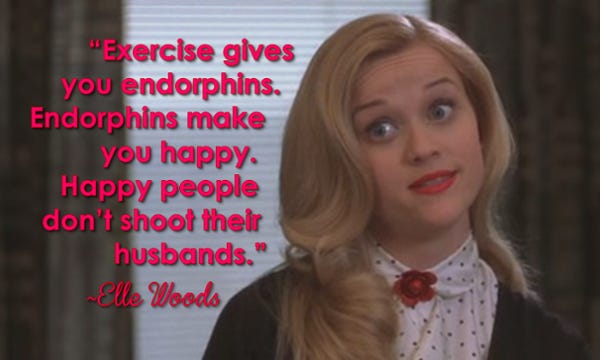
That realization led me down a rabbit hole of Positive Psychology, and my whole view on happiness has shifted since — especially since becoming a Mom.
What looks good to others does not necessarily look good to you.
A Story First
I had (ahem, have) a dream job. Or at least, it used to be my dream job before my life evolved. It’s allowed me to travel the world — Basketball All-Star Weekend with celebrity athletes, the World Championships of Track & Field in Budapest and Tokyo, a beach party in Jamaica with Usain Bolt, the Paris Olympics, spontaneous trips to London and Zurich, bi-annual trips to Germany, photo shoots on the PCH in Malibu. Company card, free athletic swag, a great team that feels like family, a decent paycheck, and a genuinely cool job centered around my passion for running. Sounds glamorous, right?
It’s spring 2024: I remember coming back to my hotel after a (work trip) fun day on a private beach in Jamaica — 80 degrees, Usain Bolt, once-in-a-lifetime stuff — and FaceTiming my husband. He was calling from chilly Boston in March, just back from a low-key birthday dinner with his parents, sister, brother-in-law, and our little niece. I was 13 weeks pregnant. I hung up and cried. I missed my family. I’d missed another celebration.

Why was I so upset when I should have been on cloud nine? The grass isn’t always greener.
That was over two years ago, and my feelings have only deepened since. It’s not about the travel, the bougie job, the money, or the celebrity experiences.
What Is Positive Psychology?
Simply put, Positive Psychology is the study and science of what makes life worth living. Harvard Health describes it as a field that “disavows the fleeting pleasures of materialism and ‘winning’” in favor of cultivating satisfaction, contentment, inner strengths, and connection — things that lead to genuine gratitude and lasting happiness.
But here’s what surprised me: these are the things that don’t actually create lasting happiness:
Money
Youth
Marriage
Physical health
And here’s what the research does show about happy people — they may make more money, live longer, have better health and stronger immune systems, be perceived as more attractive, have richer social networks, and be more creative and productive.
Happiness isn’t the result of success. Happiness leads to success.
The Happiness Formula
This is where it gets really fascinating. There’s actually a formula for happiness:
H = S + C + V
H = your enduring level of happiness
S = your genetic set point (50% of the formula)
C = life circumstances (10%)
V = voluntary control factors (40%)
H is your baseline — not those peaks of bliss when you buy something new, go on vacation, or get a promotion. Those are momentary. Eventually, you return to your enduring level.
S was humbling to learn. About half of our happiness is simply genetic. Some people are wired to be happier than others. I’m sure you know who those people are - there’s always sunshine shining over them, even on a stormy day. You’ll drift back to your set point regardless of what happens. Not the most encouraging news — but keep reading.
C refers to external circumstances. Some changes do help long-term happiness (a strong social network, avoiding chronic negativity, faith or community). Others — more money, better health, education, even changing climates — don’t move the needle much. (That last one was personally vindicating because I am staying in Boston despite my seasonal depression from January through March.)
V — voluntary variables — are where the real opportunity is. This is about cultivating positive emotions around your past, present, and future.
Past: Reframing how you feel about your history. The past does not determine your future.
Present: Finding flow. Pleasures are short-lived (watching a great TV episode, playing tennis, grabbing drinks with friends, buying those new earrings); gratification comes from being truly absorbed in something — like hitting that runner’s high where time just stops. More of that is the goal.
Future: Building hope and optimism. Ever heard of the superhero pose? Before a big interview, stand in front of a mirror with your hands on your hips like you own the room. It sounds silly, but it works — it’s a form of embodied optimism.
Tips for More Happiness
These are simple, but the science backs them up:
Gratitude journal — Write down 3 things you’re grateful for each day, morning or night. I just started doing this at night and little things like being grateful for the neighborhood kids who gave me a glass of lemonade on a 90 degree day when I’m 38 weeks - I’m blessed for the community I live in.
Gratitude note — Write to someone and thank them for something meaningful they did for you.
Personal strengths — List your 5 top strengths. (Not sure? Ask someone who knows you well.) This is one that I personally want to do - how hard is it to complement oneself - so hard. It’s arguably harder and more vulnerable to ask a friend to tell you your strengths but you’d be surprised what they say and that you only knew about yourself deep down.
There is a science to being happy — and the happiness I chased years ago looks nothing like the happiness I understand now. It’s not the material things, the money, the best job, or the perfect body. I’ve had versions of all of those, and while I’m a genuinely happy person, none of them are what actually moves me.
When we think about health, we usually think about food and movement. But what about happiness? A happy person is a holistically healthy person.
Have a happy day. 💛
xx, Caroline

the brain needs to say “yes” for any feeling to happen